What is 3D Metal Printing?
3D metal printing (also called metal additive manufacturing) is a manufacturing process that creates metal parts by building them layer by layer from a digital 3D model, rather than cutting material away from a solid block or casting it in a mold.
Common metal 3D printing technologies
-
Direct Metal Laser Sintering (DMLS)
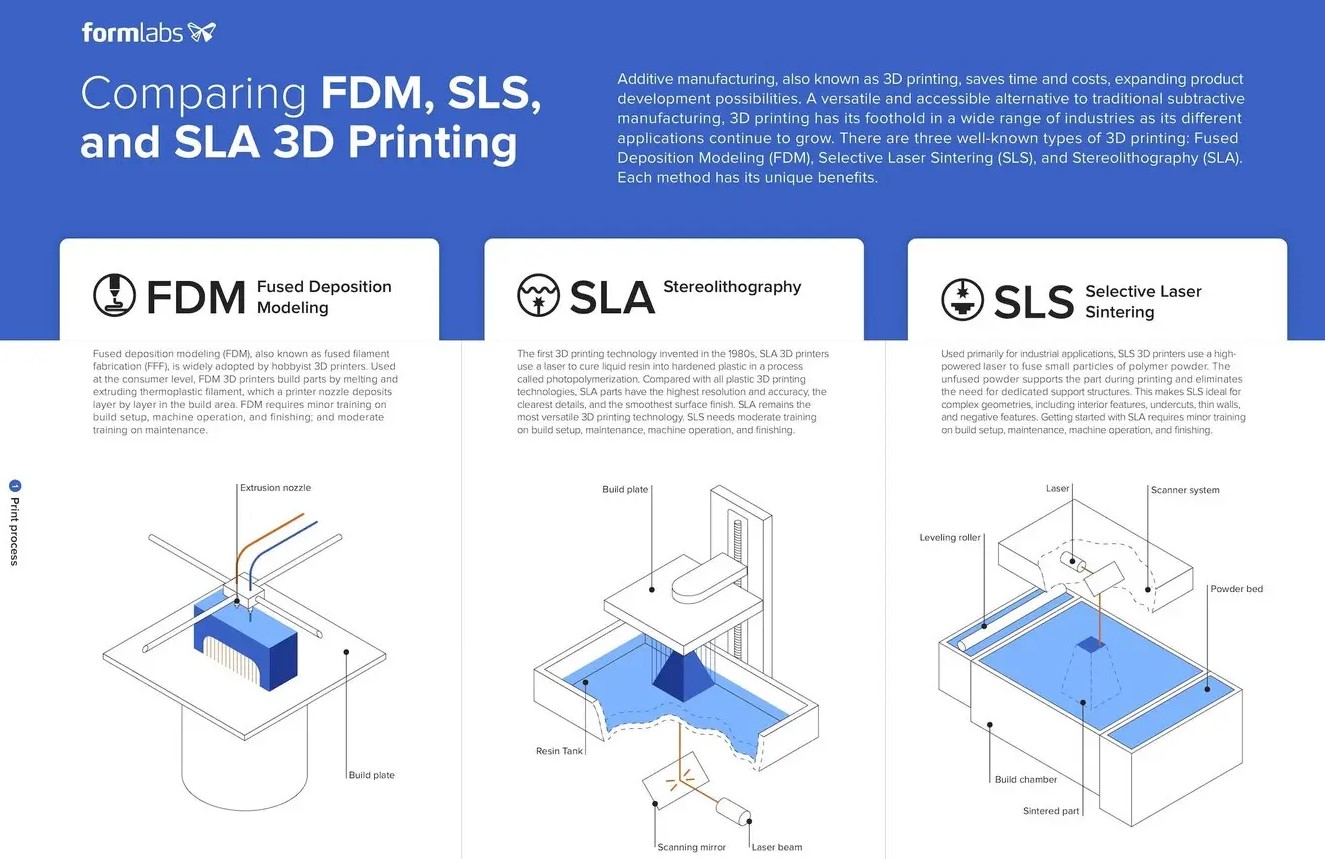
- A thin layer of fine metal powder is spread over a build plate.
- A high-powered laser welds the powder to itself.
- This process repeats layer by layer.
- Produces highly detailed, high density, strong parts
-
Other kinds of 3D metal printing include
- Powder Bed Fusion (PBF) [Note that SLS and DMLS are types of PBF], Directed Energy Deposition (DED), Binder Jetting, Metal Filament Extrusion, and more.
- VinjeFab specializes in DMLS printing and this article will not cover other kinds of metal 3D printing.
Pros
-
Complex geometries
- Can produce intricate internal channels, lattice structures, and shapes that are impossible or very expensive to machine.
-
Minimal material waste
- Unused powder is often recycled, making it more material-efficient than subtractive machining.
-
No tooling required
- Ideal for prototypes, custom parts, and low-volume production because there's no need for molds or dies.
-
High-performance materials
- Supports metals such as:
- 316L stainless steel
- Titanium
- Inconel
- Aluminum
- Supports metals such as:
-
Good mechanical properties
- Properly processed parts can achieve mechanical properties close to or comparable with wrought materials, depending on the alloy and heat treatment.
Cons
-
High equipment cost
- Industrial metal printers can cost hundreds of thousands to over a million dollars.
-
Expensive materials
- Metal powders are significantly more expensive than bar stock or filament.
-
Slow production
- Building parts layer by layer can take many hours or even days.
-
Post-processing required
- Parts typically need:
- Support removal (for many geometries)
- Machining of critical dimensions
- Parts typically need:
-
Surface finish
- Printed surfaces are relatively rough compared to machined surfaces and often require finishing.
-
Size limitations
- Maximum part size is constrained by the printer's build volume.
Image by Formlabs